How to Tell If Your Pipes Are Corroded from the Inside

Why Knowing How to Tell If Your Pipes Are Corroded from the Inside Could Save Your Home
Knowing how to tell if your pipes are corroded from the inside is one of the most important things a homeowner can do to protect their property, their water quality, and their wallet. Most pipe corrosion happens silently — hidden behind walls, under floors, and underground — long before a visible leak or burst pipe forces the issue.
Here are the most common signs your pipes are corroding internally:
- Discolored water — brown, reddish, or blue-green tints coming from the tap
- Metallic or bitter taste in your drinking water, especially first thing in the morning
- Foul or rotten egg smell from your faucets
- Low or inconsistent water pressure across multiple fixtures
- Unusual noises — banging, rattling, or gurgling from inside the walls
- Frequent clogs that keep coming back in the same drain
- Temperature fluctuations during showers with no obvious cause
- Visible rust, flaking, or discoloration on exposed pipe sections
- Damp spots, bubbling paint, or musty odors near walls or ceilings
Homes built before the 1960s are especially at risk, since they commonly used galvanized steel or cast iron pipes — materials that rust from the inside out over decades of use. But even newer copper or polybutylene systems can corrode under the right conditions, particularly in areas with acidic or mineral-heavy water.
In Kitsap and Jefferson County, Washington, local water chemistry and coastal humidity can accelerate the process faster than homeowners expect. Catching the signs early can mean the difference between a simple repair and a full repiping project.
7 Warning Signs: How to Tell If Your Pipes Are Corroded from the Inside

Detecting corrosion before it leads to a catastrophic burst is about being a "plumbing detective." Because the damage is internal, we have to look for the clues the water leaves behind. If you are noticing any of the following symptoms in your home, it’s likely time to consult a Plumber Silverdale WA to assess the health of your system.
1. Discolored Water
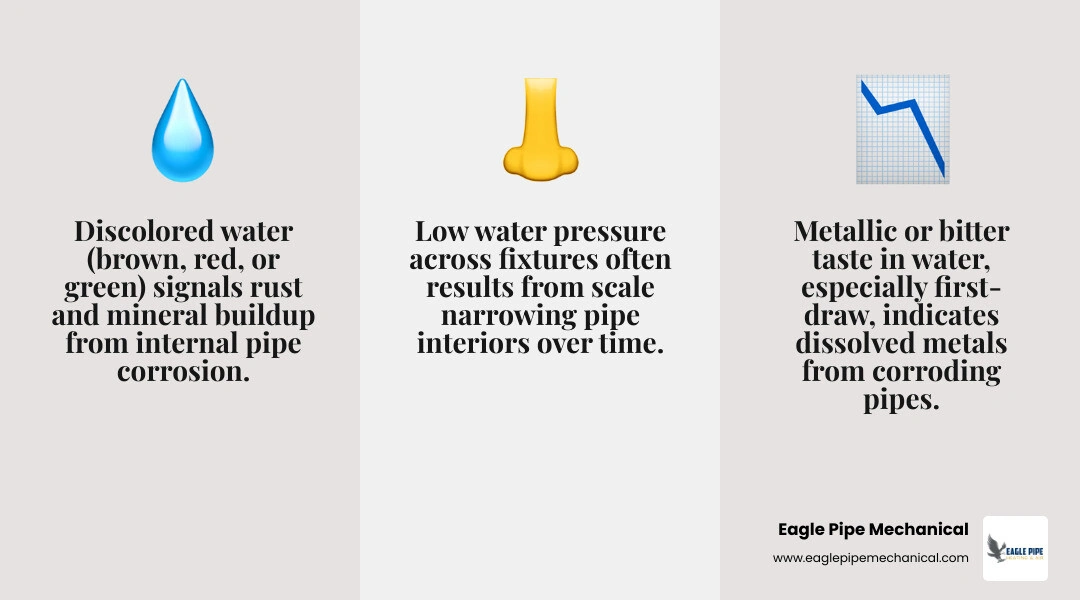
If your water looks like tea or has a reddish-brown tint, your iron or galvanized steel pipes are likely shedding rust. This is often most noticeable in the morning (the "first-draw") because the water has sat in the pipes overnight, absorbing the oxidized metal. If you see blue-green stains on your tubs or sinks, that is a classic sign of copper pipe corrosion.
2. Metallic Taste or Foul Odors
Does your water taste like you’re sucking on a penny? That metallic tang is a primary indicator of Signs Your Pipes Are Corroding From the Inside Out. Additionally, corrosion can create a haven for sulfur-reducing bacteria. These bacteria produce hydrogen sulfide gas, which gives your water that unmistakable "rotten egg" smell.
3. Low Water Pressure
As pipes corrode, they undergo a process called tuberculation. Think of it like plaque in an artery; rust and mineral deposits build up on the inside walls, narrowing the opening. This restricts flow, leading to a frustrating drop in pressure that cleaning your showerhead won't fix.
4. Unusual Noises
Corroded pipes often develop air pockets or rough internal surfaces that disrupt the smooth flow of water. This can lead to banging, rattling, or "water hammer" sounds when you turn a faucet off. If your pipes are gurgling, it may be due to internal flaking catching debris and slowing down the drainage.
5. Temperature Fluctuations
Internal corrosion can damage the sensitive valves and anti-scald mechanisms in your fixtures. If your shower suddenly turns ice cold or scalding hot when someone flushes a toilet elsewhere, it could be because corroded debris is clogging the mixing valves.
6. Frequent Clogs
In drain lines, especially old cast iron ones, internal corrosion creates a jagged, "bumpy" surface. This rough interior catches hair, grease, and soap scum much more easily than a smooth pipe, leading to persistent clogs that no amount of liquid drain cleaner (which can actually make corrosion worse!) can solve.
7. Visible External Clues
Check your exposed pipes in the basement or crawlspace. Look for "pimple-like" bumps (pustules), flaking, or white powdery deposits (calcification). Even if there isn't a puddle yet, these are signs that the metal has weakened so much from the inside that it is starting to push through the exterior.
Why Internal Corrosion Happens in Kitsap County Homes
Understanding the "why" behind plumbing failure helps in preventing it. Corrosion is a chemical or electrochemical reaction between the pipe material and its environment. In the Pacific Northwest, several factors come into play.
- Water pH Levels: The acidity of your water is a major factor. A neutral pH is 7.0. If your water is "soft" and acidic (below 7.0), it is much more aggressive and will eat away at metal surfaces, especially copper.
- Oxidation: This is the basic reaction between metal and the oxygen dissolved in the water. Over time, this creates the rust (iron oxide) that we see in galvanized pipes.
- Mineral Deposits: Hard water contains calcium and magnesium. While a little bit of scale can sometimes act as a protective barrier, excessive buildup leads to the "clogged artery" effect mentioned earlier.
- High Temperatures: Hot water accelerates chemical reactions. This is why you might notice more corrosion or leaks on your hot water lines than your cold ones.
- Galvanic Corrosion: This occurs when two different metals (like copper and galvanized steel) touch each other. An electrical current flows between them, causing the less "noble" metal to corrode rapidly.
- Stagnant Water: Water that sits for long periods—such as in a guest bathroom or a vacation home—allows more time for chemical reactions to take place and for bacteria to grow.
Knowing How to Spot Pipe Corrosion at Home involves understanding these local environmental stressors.
Identifying how to tell if your pipes are corroded from the inside by material
Different materials fail in different ways. If you live in an older home, you should know what you're looking at:
- Galvanized Steel: Common in homes built before 1960. These rust from the inside out. The zinc coating eventually wears off, leaving the steel vulnerable to massive rust buildup.
- Copper: While durable, copper is prone to "pinhole leaks." This is localized pitting corrosion that looks like a tiny green spot on the outside but represents a hole eaten through the pipe wall.
- Cast Iron: Often used for waste lines. These pipes can develop long cracks along the top or "bellies" where the bottom of the pipe has completely thinned out.
- Polybutylene: A grey plastic pipe used in the 80s and 90s. While it doesn't "rust," it reacts poorly to chlorine in the water, becoming brittle and snapping without warning. If you have this in your home, a Plumber Bainbridge Island WA can help you plan for a safer alternative.
How to tell if your pipes are corroded from the inside using simple home tests
You don't need a lab to start your investigation. Try these DIY checks:
- The First-Draw Test: Fill a clear glass with water first thing in the morning. Hold it up to the light. If you see particles or a tint that disappears after running the water for a minute, the corrosion is inside your home's pipes.
- Aerator Check: Unscrew the small screen (aerator) at the tip of your faucet. If it's full of blue, orange, or black "sand," those are pieces of your pipes breaking off.
- pH Strips: You can buy simple water testing kits to see if your water is acidic. If the pH is low, your pipes are at high risk.
- Visual Inspection: Head to your basement or utility closet. If you see "crusty" buildup around joints or valves, it’s a sign of a slow, corrosive leak. If you're unsure what you're seeing, a Plumber Port Townsend WA can provide a professional assessment.
Hidden Dangers of Corroding Plumbing Systems
Corrosion isn't just a nuisance; it’s a threat to your home's health and safety.
- Health Risks: Lead was often used in the solder of older copper pipes or in the pipes themselves. Corrosion can leach lead into your drinking water, which is a serious neurotoxin. Furthermore, rust provides a porous surface where harmful bacteria like E. coli can hide from chlorine treatments.
- Property Damage: A pinhole leak can spray water behind a wall for months before you notice it. This leads to rotted studs, ruined insulation, and the dreaded "M-word": Mold.
- Rising Utility Bills: If your pipes are leaking—even tiny "silent" leaks—your water bill will creep up. Additionally, if your water heater is full of corroded sediment, it has to work much harder to heat the water, driving up your energy costs.
- Structural Integrity: Over time, consistent moisture from failing pipes can weaken the very foundation and framing of your home.
Prevention and Solutions for Corroded Pipes
If you've discovered you have a problem, don't panic. There are several ways to address it, ranging from preventative maintenance to modern upgrades.
| Feature | PEX Piping | Metal Piping (Copper/Steel) |
|---|---|---|
| Corrosion Resistance | Excellent (Immune to rust/pitting) | Prone to oxidation and pH damage |
| Scale Buildup | Very Low | High (Tuberculation) |
| Lifespan | 40-50+ Years | 20-50 Years (Varies by water) |
| Flexibility | High (Fewer joints needed) | Low (Rigid) |
Proactive Solutions
- Water Softeners and Filters: If your water is the cause of the corrosion, treating the water at the entry point can stop the damage in its tracks.
- Anode Rods: Your water heater has a "sacrificial" anode rod designed to corrode so the tank doesn't have to. Replacing this every 3 years can double the life of your heater.
- Dielectric Unions: If you must join two different metals, a Plumber Port Orchard WA will use these special fittings to prevent galvanic corrosion.
- Whole-Home Repiping: For homes with systemic failure, replacing old metal with PEX is often the most cost-effective long-term move. PEX is flexible, doesn't corrode, and handles the freezing temperatures we sometimes see in Jefferson County better than rigid pipe.
- Pipe Lining: In some cases, especially for sewer lines, an epoxy liner can be inserted into the old pipe to create a brand-new, smooth interior without digging up your yard. If you suspect your main line is failing, contact Plumbers Poulsbo WA for an inspection.
Frequently Asked Questions about Pipe Corrosion
Can I fix a corroded pipe myself?
For a temporary fix, like a small pinhole leak, you can use a pipe clamp or epoxy putty. However, these are "band-aids." If a pipe is corroding from the inside, the metal is thin everywhere, not just at the leak site. Professional replacement is the only way to ensure the leak won't just move six inches down the line next week.
Does low water pressure always mean corrosion?
Not always. It could be a faulty pressure regulator, a leak in the municipal main, or a simple clog in a single fixture's aerator. However, if the pressure drop is gradual and affects the whole house, internal corrosion is the prime suspect.
How long do galvanized pipes last in Washington?
In our region, galvanized pipes typically last 40 to 60 years. Since most of these were installed before 1960, almost every galvanized system in Kitsap County is currently at or past its "expiration date."
Conclusion
At Eagle Pipe Mechanical, we understand that your home is your sanctuary. As a 100% women-owned and operated business with over 45 years of experience, we’ve seen the damage that hidden corrosion can do to local homes in Kitsap and Jefferson Counties. We pride ourselves on providing honest, efficient, and personable solutions tailored to your specific needs—whether that's a simple maintenance check or a full-home repipe to improve your energy efficiency.
We serve neighbors throughout Poulsbo, Kingston, Bainbridge Island, Silverdale, and beyond. If you’re worried about the health of your plumbing, don’t wait for a flood. We offer flexible financing options through Synchrony to help make necessary upgrades manageable.
Ready to clear up your water and protect your home? Explore our Plumbing Services or give us a call today. We’re here to help you optimize your home’s efficiency and ensure your pipes stay clear for decades to come.
CUSTOMER TESTIMONIALS
Our customers’ experiences say more than we ever could. See how Eagle Pipe Heating & Air has earned trust across the Pacific Northwest with reliable service and lasting results.